

Creating a healthier home starts with simple choices. For example, the cleaning products you use, the food containers you buy, and the materials in your furniture can all affect your home environment.
However, low-toxin living does not mean throwing away everything you own. You do not need expensive products or a home free of all chemicals. Instead, the goal is to reduce unnecessary exposure to substances that may cause harm.
In this guide, you will learn where common household exposures come from and which changes deserve attention first. You will also discover how to read product labels, compare safer options, and improve your home one room at a time.
Most importantly, you can make these changes at your own pace.
Key Takeaways
- Start with known concerns. Fix moisture problems, improve ventilation, and store household chemicals safely.
- Reduce unnecessary exposure. Choose products carefully and use only what you need.
- Look beyond marketing. A product labeled natural or non-toxic is not always safer.
- Make changes gradually. Replace products when needed instead of buying everything new.
- Focus on everyday habits. Small changes can help create a healthier home.
- Choose evidence over fear. Use trusted information to guide your decisions.
What Is Low-Toxin Living?
Low-toxin living means reducing unnecessary contact with substances that may affect your health. These substances can come from cleaning products, household dust, cooking, furniture, and personal-care products.
However, not every chemical is harmful. In fact, chemicals are part of the food we eat, the water we drink, and the air we breathe.
The real concern is whether a substance can cause harm under the conditions in which we encounter it.
For example, a strong cleaning product may irritate your eyes or skin. However, using that product as directed may present a different level of risk than mixing it with other cleaners.
Therefore, low-toxin living focuses on practical choices rather than trying to remove every chemical from your home.
Low-Toxin vs. Non-Toxic: What Is the Difference?
You may see the words low-toxin and non-toxic on many household products. Although they sound similar, they do not always mean the same thing.
Low-toxin describes an approach that aims to reduce exposure to substances of concern.
Non-toxic is often used to market products as safer. However, the label alone does not prove that a product is harmless in every situation.
Likewise, natural ingredients are not always safer than man-made ingredients. For example, certain plant oils can irritate the skin or cause harm when used incorrectly.
Instead of relying on a single claim, look at the ingredients, intended use, and available safety information.
At GroLifeHealth, our approach is simple: Educate first. Recommend second.
Why Household Chemical Exposure Matters
Every home contains substances from daily activities and household materials.
For example, cooking can release particles into the air. Cleaning products may give off fumes, while some paints and furniture can release chemicals into indoor air.
In addition, household dust may contain substances brought indoors from outside or released by products already in the home.
However, finding a chemical does not automatically mean it poses a serious health risk.
Several factors affect the level of concern.
Understanding Hazard, Exposure, and Risk
Hazard means a substance has the potential to cause harm.
Exposure means coming into contact with that substance. For example, you may breathe it in, swallow it, or get it on your skin.
Risk describes how likely harm is under the conditions of exposure.
For this reason, the amount of contact, how often it happens, and the type of substance all matter.
Consider a household cleaner. When used as directed, it may be suitable for its intended task. However, mixing it with an incompatible cleaner could create dangerous gases.
As a result, safe product use is often just as important as choosing the product itself.
Who May Need Extra Care?
Some people may be more sensitive to certain household exposures.
These include:
- Babies and young children.
- Pregnant individuals.
- Older adults.
- People with asthma or breathing problems.
- Individuals with allergies or known sensitivities.
For example, young children often play on floors and put their hands in their mouths. As a result, they may come into contact with household dust more often.
Therefore, it makes sense to consider the needs of everyone living in your home.
Your Five-Part Low-Toxin Living Roadmap
Creating a healthier home becomes easier when you focus on five key areas.
Each area offers simple steps you can take now. In addition, these changes can guide future purchases when products need replacing.
1. Improve Indoor Air Quality
Indoor air quality is an important part of a healthy home.
Cooking, cleaning, candles, smoke, moisture, and building materials can all affect the air you breathe.
Fortunately, many improvements begin with simple habits.
Start with these steps:
- Use your kitchen exhaust fan while cooking.
- Run the bathroom fan during showers.
- Reduce unnecessary air fresheners and room sprays.
- Avoid smoking indoors.
- Repair leaks and address damp areas.
- Follow directions when using paints and cleaners.
- Maintain heating, cooling, and ventilation systems.
In addition, consider how outdoor air conditions affect your home. Opening windows may help in some situations, but it may not be the best choice during periods of heavy outdoor pollution.
Air purifiers can also help reduce certain airborne particles. However, they do not replace proper ventilation or the need to control pollution sources.
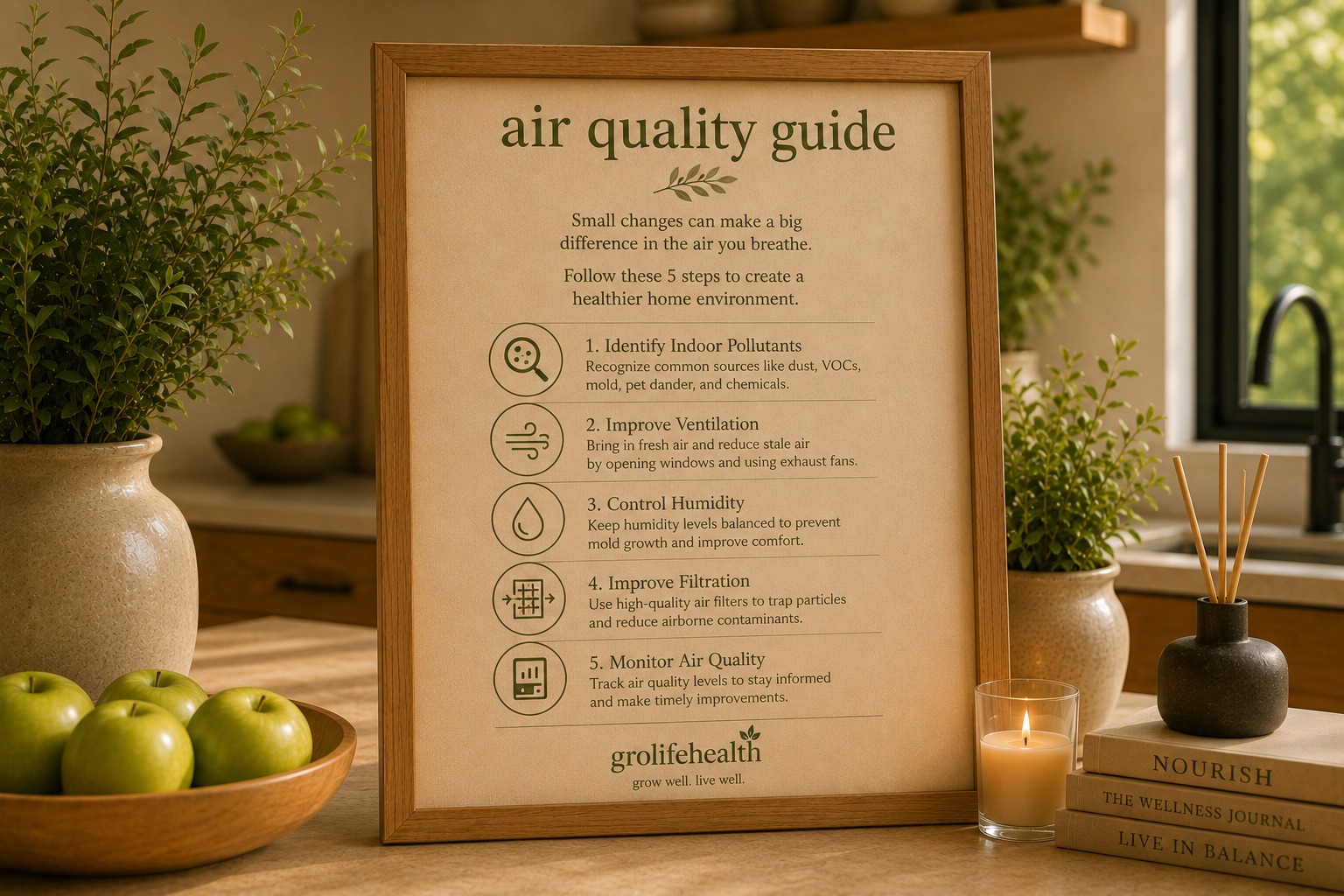
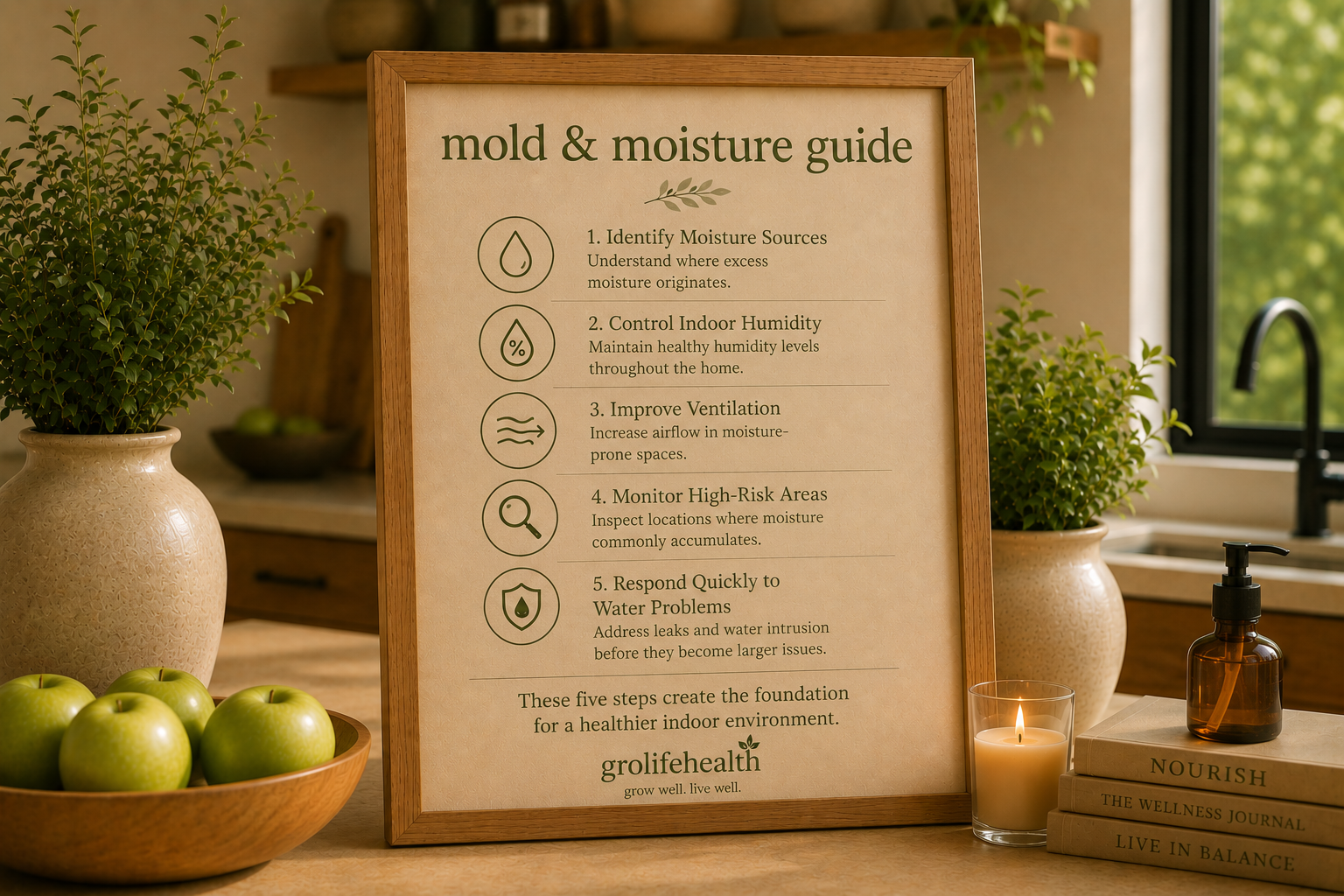
For more information, explore our GroLifeHealth guides on Air Quality Guide and Mold & Moisture Guide.
2. Choose Cleaning and Laundry Products Carefully
Cleaning products help keep your home sanitary and comfortable. However, some contain ingredients that may irritate the skin, eyes, or lungs.
Therefore, choosing the right product and using it correctly are both important.
Practical changes include:
- Choose cleaners designed for the task.
- Consider fragrance-free products when suitable.
- Use the recommended amount of detergent.
- Avoid unnecessary scent boosters.
- Store cleaning supplies away from children.
- Follow all safety directions.
- Never mix bleach with ammonia, acids, or incompatible cleaners.
Also, remember that cleaning and disinfecting are different tasks.
Cleaning removes dirt and many germs from surfaces. Disinfecting uses products designed to kill certain germs.
Although disinfecting is useful in some situations, not every household surface needs routine disinfection.
Fragrance-Free vs. Unscented
These labels may sound alike, but they can mean different things.
A fragrance-free product is generally intended to contain no added fragrance. However, the exact meaning depends on the claim and any standard behind it.
In contrast, an unscented product may contain ingredients that hide unwanted odors.
Therefore, review the product information instead of relying on the label alone.
The EPA Safer Choice program can also help you find cleaning products that meet defined ingredient and performance standards.
Related guides:
- Best Non-Toxic Cleaning Products: Ingredients and Certifications Compared – coming soon
- 7 Best Non-Toxic Laundry Detergents: Ingredients & Performance – coming soon
- Fragrance-Free vs. Unscented: What Product Labels Really Mean – coming soon
3. Make Thoughtful Cookware and Food Storage Choices
Your kitchen contains many materials that come into contact with food.
For example, cookware may be made from stainless steel, cast iron, ceramic, or coated metals. Food containers may use glass, plastic, or stainless steel.
Each material has benefits and limits.
Stainless steel is durable and works well for many cooking methods. Meanwhile, cast iron holds heat effectively but needs proper care.
Glass is another useful option for food storage. However, it can break and may not be suitable for every use.
Rather than assuming one material is always safest, consider how you plan to use it.
Start with these habits:
- Follow cookware temperature limits.
- Replace damaged cookware when needed.
- Use food containers as directed.
- Avoid heating food in containers not designed for that purpose.
- Compare materials when buying new products.
- Check the details behind claims such as PFAS-free.
Importantly, you do not need to throw away every plastic container or nonstick pan.
Instead, begin with damaged items and products that no longer meet your needs.
Related guides:
- Safest Cookware Materials: Stainless Steel vs. Cast Iron vs. Ceramic – coming soon
- 7 Best Non-Toxic Cookware Sets: Top Options Compared – coming soon
- Best Glass Food Storage Containers: Plastic-Free Options Compared – coming soon
4. Review Furniture, Bedding, and Home Materials
Furniture, mattresses, paint, flooring, and other home materials can affect indoor air quality.
For example, some new products release chemicals into the air. These chemicals may include volatile organic compounds, also called VOCs.
The amount released depends on the product, its materials, and how it is used.
Therefore, when buying furniture or planning home improvements, look for clear information about materials and emissions.
Consider these factors:
- Product materials and construction.
- Available safety information.
- Trusted third-party certifications.
- Manufacturer care instructions.
- Comfort and durability.
- Price and long-term value.
In addition, follow ventilation directions when painting, installing flooring, or using adhesives.
What About Organic Mattresses and Bedding?
Organic cotton, wool, latex, and other materials may appeal to shoppers who want more information about how products are made.
However, an organic label does not automatically mean a mattress is healthier or more comfortable.
Instead, check what the certification covers.
For example, some standards focus on organic materials, while others test for certain substances or chemical emissions.
Also, consider comfort, support, durability, and your budget before making a purchase.
Related guides:
- Best Organic Mattresses: Materials, Certifications & Top Picks – coming soon
- Best Organic Cotton Sheets: What to Look For Before Buying – coming soon
- Low-VOC Furniture: How to Choose Safer Materials and Finishes – coming soon
- Best Non-Toxic Pillows: Materials and Certifications Compared – coming soon
5. Simplify Personal-Care Products and Daily Habits
Personal-care products include soaps, shampoos, lotions, cosmetics, and body washes.
Because these products often touch the skin, ingredients may matter for people with allergies or sensitivities.
However, a long ingredient list does not automatically mean a product is unsafe. Likewise, natural ingredients can still cause reactions.
For this reason, choose products that meet your needs and work well for your skin.
Helpful habits include:
- Use products as directed.
- Consider fragrance-free options if fragrance causes irritation.
- Avoid buying products you do not need.
- Follow storage and expiration instructions.
- Check ingredients when you have known allergies.
- Ask a healthcare professional about ongoing skin reactions.
In many cases, a simple routine is easier to manage and less expensive.
Related guide: Best Fragrance-Free Body Washes for Sensitive Skin. – coming soon
A Room-by-Room Guide to a Low-Toxin Home

You do not need to improve every room at once.
Instead, begin with the spaces you use most often. Then, work through the remaining rooms as time and money allow.
Kitchen: Focus on Cooking and Food Contact
The kitchen is a good place to start because it combines cooking, cleaning, and food storage.
First, use appropriate ventilation when cooking. Next, review cookware and containers for damage.
In addition, store cleaning chemicals away from food and follow all product instructions.
When something needs replacing, compare materials, performance, and price before buying.
Bathroom: Control Moisture and Product Use
Bathrooms often contain cleaning products, personal-care items, and added fragrances.
However, moisture is another important concern.
For example, poor ventilation can allow damp conditions to continue. Over time, this may support mold growth.
Therefore, use the bathroom exhaust fan, repair leaks, and dry areas that remain wet.
Also, consider whether every scented product in the bathroom is necessary.
Bedroom: Create a Comfortable Sleep Environment
A healthy bedroom should support comfort, cleanliness, and good sleep.
Start by managing dust and moisture. In addition, keep bedding clean and reduce unnecessary fragrance products.
When you need a new mattress, pillow, or set of sheets, review materials and certifications.
However, do not assume that an expensive replacement is necessary if your current products are working well.
Laundry Area: Keep the Routine Simple
Laundry products often include detergent, fabric softener, stain removers, and fragrance boosters.
Although some serve useful purposes, others may not be needed.
For example, using more detergent than recommended does not always improve cleaning.
Instead, follow the product directions and consider whether added fragrances are necessary.
Finally, keep detergent packets and other concentrated products securely stored.
Living Room and Workspace: Review Air and Materials
Living spaces contain furniture, electronics, flooring, and other household materials.
Over time, these areas also collect dust.
Therefore, regular cleaning and suitable ventilation are useful starting points.
When purchasing new furniture or flooring, compare product information and any available emissions certifications.
Meanwhile, continue maintaining the products you already own rather than replacing them without a clear reason.
How to Read Low-Toxin Product Labels
Product labels can make shopping confusing.
For example, you may see terms such as natural, clean, green, non-toxic, or chemical-free.
Although these words sound reassuring, they do not always explain how a product was tested.
Therefore, look beyond the marketing.
| Product Claim | What You Should Know |
|---|---|
| Natural | Natural ingredients are not always safer |
| Non-Toxic | The claim needs evidence and does not mean every use is risk-free |
| Chemical-Free | All physical materials contain chemicals |
| Fragrance-Free | Check whether fragrance ingredients have been added |
| Unscented | May contain ingredients that hide odors |
| PFAS-Free | Review which substances the claim covers |
| Organic | Check what materials or ingredients are certified |
| Low-VOC | Does not necessarily mean zero chemical emissions |
| Hypoallergenic | Does not guarantee that no one will have a reaction |
Certifications That Can Help
Some independent programs provide more useful information than broad marketing claims.
EPA Safer Choice
This program reviews qualifying products using defined ingredient and performance standards. As a result, it can help shoppers compare certain cleaning products.
GREENGUARD Gold
This certification addresses chemical emissions from eligible products. However, it does not mean a product is completely free of chemicals.
Global Organic Textile Standard (GOTS)
GOTS sets requirements for qualifying organic textiles and how they are processed. Therefore, it can help shoppers evaluate certain textile claims.
OEKO-TEX STANDARD 100
This standard tests qualifying textiles and their components against defined limits for certain harmful substances. However, it is not the same as organic certification.
CertiPUR-US
This program applies to qualifying flexible polyurethane foam. It covers specific content and emissions requirements rather than automatically certifying an entire mattress.
Before relying on any certification, check what it covers and whether the product actually qualifies.
15 Practical Low-Toxin Swaps Worth Considering
You do not need to make every change on this list.
Instead, choose the options that fit your household and address your main concerns.
| Instead Of | Consider |
|---|---|
| Using room sprays to cover odors | Find and remove the odor source |
| Adding fragrance throughout the home | Reduce unnecessary scented products |
| Using too much cleaning solution | Follow the recommended amount |
| Disinfecting every surface routinely | Clean normally and disinfect when needed |
| Mixing household cleaners | Use each product separately as directed |
| Heating food in unsuitable containers | Use containers designed for the temperature |
| Keeping damaged cookware | Replace it with suitable cookware |
| Trusting every natural product claim | Review ingredients and supporting evidence |
| Using extra laundry scent boosters | Simplify your laundry routine |
| Cooking without proper ventilation | Use a suitable kitchen exhaust system |
| Ignoring bathroom moisture | Improve ventilation and repair leaks |
| Spraying pesticides repeatedly | Focus on pest prevention and targeted treatment |
| Buying unnecessary personal-care products | Keep a simple routine |
| Replacing furniture based only on marketing | Evaluate condition, materials, and actual needs |
| Making expensive changes immediately | Start with important hazards and affordable improvements |
In addition, remember that some of the most useful changes involve better habits rather than new products.
For example, using your kitchen exhaust fan may be more practical than replacing every item in your kitchen.
Likewise, reducing unnecessary fragrance products can be a simple first step.
What Should You Change First?
With so many products advertised as healthier, deciding where to begin can feel difficult.
However, not every household concern deserves the same level of attention.
A practical plan begins with known hazards. Next, it focuses on everyday habits. Finally, it considers thoughtful product replacements.
First Priority: Address Known Hazards
Begin with problems that may pose clear health or safety concerns.
These include:
- Carbon monoxide hazards.
- Gas leaks or faulty fuel-burning appliances.
- Serious water damage or mold growth.
- Unsafe chemical storage.
- Mixing incompatible cleaning products.
- Known drinking-water contamination.
- Lead hazards in older homes, especially during renovation.
Some problems require professional help.
For example, suspected gas leaks or carbon monoxide emergencies require immediate safety action. Do not attempt to solve these problems by simply opening a window or changing household products.
Second Priority: Improve Everyday Habits
After addressing known hazards, focus on simple changes.
For example, you can reduce unnecessary fragrances, improve ventilation, and follow cleaning-product directions.
In addition, regular home maintenance can help prevent larger problems.
These habits often cost little or nothing.
Third Priority: Replace Products When Needed
Finally, review products that are worn out, damaged, or no longer suitable.
When replacing them, compare materials, safety information, performance, and price.
However, avoid discarding useful products simply because a different brand makes broad health claims.
Creating a Low-Toxin Home on a Budget
A healthier home does not need to be expensive.
In fact, reducing unnecessary products may help lower household spending.
First, focus on simple habits. For example, use the correct amount of detergent, reduce unnecessary fragrances, and maintain ventilation systems.
Next, make a list of products that truly need replacing.
When shopping, compare useful features rather than choosing the most expensive option.
For larger purchases, such as mattresses or furniture, consider whether replacement is needed now or can wait.
Over time, this approach can help you make steady improvements without unnecessary costs.
Free or Low-Cost Improvements
- Follow product safety instructions.
- Reduce unnecessary fragrance products.
- Maintain a regular cleaning routine.
- Repair small leaks promptly.
- Store chemicals securely.
- Use appropriate ventilation.
- Avoid buying duplicate products.
Changes That May Require a Budget
- Replacing damaged cookware.
- Purchasing durable food containers.
- Improving kitchen or bathroom ventilation.
- Choosing new furniture or bedding.
- Addressing home repairs or environmental hazards.
Importantly, spending more does not always mean achieving a healthier home.
Instead, focus on changes that offer a clear practical benefit.
Your 30-Day Low-Toxin Living Checklist
Making a few changes each week can help you build lasting habits.
Week 1: Identify Your Priorities
- Walk through each room.
- Check for leaks and moisture problems.
- Review household chemical storage.
- Identify unnecessary fragrance products.
- Make a list of damaged items.
Week 2: Make Simple Changes
- Improve ventilation during cooking.
- Use cleaning products as directed.
- Reduce unnecessary air fresheners.
- Store chemicals safely.
- Choose two or three habits to maintain.
Week 3: Review Future Purchases
- Research products that need replacing.
- Compare materials and features.
- Review trusted certifications.
- Check manufacturer instructions.
- Set a realistic budget.
Week 4: Build a Routine
- Keep the changes that work for your household.
- Create a short list of preferred products.
- Schedule important home maintenance.
- Plan future improvements.
- Review your progress.
Remember, the goal is steady improvement rather than perfection.
Common Low-Toxin Living Mistakes to Avoid
Assuming Natural Always Means Safe
Natural ingredients can still cause irritation or other health problems.
Therefore, evaluate the product and how it will be used.
Replacing Everything at Once
Buying all new products can be costly and create unnecessary waste.
Instead, begin with known hazards and items that already need replacing.
Ignoring Indoor Air Quality
Even carefully chosen products cannot solve every indoor air problem.
For example, cooking, moisture, and combustion appliances can affect air quality.
Therefore, source control and ventilation remain important.
Trusting Every Product Label
Broad claims may not provide enough information to judge safety.
Instead, look for specific details and reliable supporting evidence.
Focusing on Small Concerns Before Major Hazards
Some household risks are well established, while others are still being studied.
For this reason, address serious safety problems before spending money on minor product changes.
Frequently Asked Questions About Low-Toxin Living
What is the easiest way to start low-toxin living?
Start with simple habits. For example, reduce unnecessary fragrances, improve ventilation, and use cleaning products correctly. In addition, address known hazards before buying new products.
Is low-toxin living the same as chemical-free living?
No. Everything in your home, including water and air, contains chemicals. Instead, low-toxin living focuses on reducing unnecessary exposure to substances that may cause harm.
Are non-toxic cleaning products always safer?
Not necessarily. Safety depends on the ingredients, amount used, and type of exposure. Therefore, review product information and choose cleaners suited to the task.
Are fragrance-free products better?
They may be helpful for people who want to reduce fragrance exposure or have certain sensitivities. However, the full product formula still matters.
Should I replace all plastic food containers?
No. First, check whether your containers are damaged or being used incorrectly. Then, consider glass or stainless steel when replacements are needed.
Is stainless steel cookware safer than nonstick cookware?
The answer depends on the products, their condition, and how they are used. Stainless steel is durable, but it is not automatically the best choice for every household.
Are organic mattresses worth buying?
Organic mattresses may appeal to people who prefer certain materials and certifications. However, comfort, support, durability, and price also matter. An organic label alone does not prove better health or sleep.
Can low-toxin living prevent disease?
Reducing certain known hazards can lower related health risks. However, low-toxin living as a broad lifestyle has not been proven to prevent specific diseases. Therefore, these choices should support—not replace—medical care and established prevention practices.
Is low-toxin living expensive?
It does not have to be. Many useful changes involve better habits, maintenance, and reducing unnecessary products. As a result, you can often begin without making major purchases.
The GroLifeHealth Five-Step Framework

Creating a healthier home becomes easier when you follow a clear plan.
Step 1: Identify
First, look for possible exposure sources and known safety concerns in your home.
Step 2: Prioritize
Next, focus on the problems that matter most. For example, address water damage or unsafe chemical storage before making optional product upgrades.
Step 3: Reduce
Then, improve everyday habits. Better ventilation, correct product use, and regular maintenance are useful starting points.
Step 4: Replace Thoughtfully
When products need replacing, compare materials, safety information, performance, and cost.
Step 5: Maintain
Finally, build simple routines that help keep your home comfortable, clean, and safe.
By following these steps, you can make progress without feeling pressured to change everything at once.
A Nursing Perspective: Why Practical Prevention Matters
Health education works best when people understand both the evidence and the actions they can take.
The same idea applies to creating a healthier home.
For example, carbon monoxide exposure and unsafe chemical mixing are well-known hazards. In contrast, some consumer product claims are based on limited or developing research.
Therefore, these concerns should not receive the same level of attention.
Instead, begin with clear risks and practical solutions. Then, consider other changes based on your household’s needs.
At GroLifeHealth, we believe a healthier home should support everyday life without creating unnecessary fear or expense.
Educate first. Recommend second.
Final Thoughts: A Healthier Home Starts With Simple Choices
Low-toxin living is not about creating a perfect home.
Instead, it is about making thoughtful decisions that reduce unnecessary exposure and support a healthy living environment.
Start by addressing known hazards. Next, improve daily habits and maintain your home. When products need replacing, choose options based on reliable information rather than marketing claims.
Most importantly, remember that small changes can be easier to maintain than major lifestyle overhauls.
A healthier home grows from informed choices, practical routines, and steady progress.
GROW WELL. LIVE WELL.
Continue Exploring Low-Toxin Living
As you improve your home, explore these GroLifeHealth topics for more detailed guidance.
Low-Toxin Living Foundations
- How to Reduce Chemical Exposure at Home: 15 Practical Changes
- Non-Toxic vs. Low-Toxin Products: What Labels Really Mean
- 15 Simple Product Swaps for a Healthier Home
Cleaning and Laundry
- How to Choose the Best Non-Toxic Cleaning Products
- 7 Non-Toxic Laundry Detergents That Deserve a Closer Look
- 7 Non-Toxic Dishwasher Detergents That May Surprise You
- Fragrance-Free vs. Unscented: 7 Things to Know Before Buying
Cookware and Food Storage
- Safest Cookware Materials: Stainless Steel vs. Cast Iron vs. Ceramic – coming soon
- 7 Best Non-Toxic Cookware Sets: Top Options Compared – coming soon
- Best Glass Food Storage Containers: Plastic-Free Options Compared – coming soon
- PFAS in Household Products: Where They’re Found and How to Reduce Exposure – coming soon
Bedroom, Textiles, and Home Materials
- Best Organic Mattresses: Materials, Certifications & Top Picks – coming soon
- Best Organic Cotton Sheets: What to Look For Before Buying – coming soon
- Low-VOC Furniture: How to Choose Safer Materials and Finishes – coming soon
- Best Non-Toxic Pillows: Materials and Certifications Compared – coming soon
Bathroom and Everyday Swaps
- Best Fragrance-Free Body Washes for Sensitive Skin – coming soon
- Best Fragrance-Free Household Products: A Room-by-Room Guide – coming soon
- Best Non-Plastic Cutting Boards: Wood, Bamboo & Other Options – coming soon
- How to Create a Low-Toxin Home on a Budget – coming soon
References and Further Reading
- U.S. Environmental Protection Agency. Improving Indoor Air Quality. Guidance on source control and ventilation.
- U.S. Environmental Protection Agency. Safer Choice. Product ingredient and performance criteria.
- U.S. Environmental Protection Agency. Search Safer Choice Products. Product database and fragrance-free designations.
- National Institute of Environmental Health Sciences. Endocrine Disruptors. Research on endocrine-active substances.
- National Institute of Environmental Health Sciences. Per- and Polyfluoroalkyl Substances. PFAS exposure and health research.
- Federal Trade Commission. Environmental Claims: Summary of the Green Guides. Guidance on environmental marketing claims.
- U.S. Environmental Protection Agency. Volatile Organic Compounds’ Impact on Indoor Air Quality. Indoor VOC sources and considerations.
- U.S. Environmental Protection Agency. Introduction to Integrated Pest Management. Pest prevention and management.
Educational disclaimer: This information is intended for general education and does not replace medical advice, product-specific safety instructions, or professional environmental assessment.